


Selecting the right towel supplier for any business demands careful evaluation. Buyers often rush the towel purchase, communicate poorly with towel suppliers, or focus solely on cost, leading to issues like unstable GSM, fading colors, and late shipments. Effective communication and a thorough checklist help avoid these pitfalls and ensure every towel purchase meets expectations for new towels, luxury applications, and daily use.
Before placing a towel purchase order, consider these ten essential questions:
What materials and yarns do you offer for towels?
What quality standards and certifications do your towels meet?
How do you test towel durability and absorbency?
What customization options are available for luxury branding or packaging?
How is towel pricing structured, and what payment terms apply?
What is your average lead time and production capacity for bulk towel purchase?
Can you provide references or case studies from previous towel suppliers?
What quality control and return policies cover each towel purchase?
What shipping methods and export documents support international towel purchase?
Do you offer eco-friendly towels or sustainable packaging for luxury or regular towel purchase?
This article clarifies the importance of each question, guides buyers on what to expect in supplier responses, and shows how each answer affects towel purchase decisions.
Key Points
Ask about materials and yarns to ensure towels meet your quality needs.
Verify quality standards and certifications to guarantee safety and performance.
Inquire about testing methods for durability and absorbency to avoid poor quality.
Understand pricing structures and payment terms to manage your budget effectively.
Confirm lead times and production capacity to ensure timely delivery of orders.
Request references and case studies to assess the supplier’s reliability.
Clarify quality control processes and return policies to protect your investment.
Explore customization options for branding and packaging to enhance your product appeal.
Towel Supplier Materials
Material Types
The quality of materials directly determines the performance, feel, and durability of towels. Buyers should understand the differences between common towel fibers before selecting a towel manufacturer. Each material offers unique benefits for specific applications, from hospitality to healthcare.
Below is a comparison of widely used towel materials:
Material | Features | Benefits | Applications |
|---|---|---|---|
Polyester | Strong, durable, hydrophobic | Quick-drying, affordable, highly durable | Sports, outdoor, industrial cleaning |
Coral Fleece | Soft, lightweight, plush texture | Gentle on skin, quick-drying, resists pilling | Baby towels, bathrobes, spa products |
Rayon | Soft, smooth, highly absorbent | Luxurious feel, hypoallergenic, moisture-wicking | Bath towels, hand towels, hygiene products |
Non-Woven Fabric | Bonded fibers, often disposable | Cost-effective, hygienic, lightweight | Medical, cleaning, disposable wipes |
Wood Fiber | Antibacterial, excellent water absorption | Strong oil removal, easy cleaning | Kitchen, cleaning tasks |
Linen | Excellent moisture absorption, durable | Antibacterial, breathable, summer use | Kitchen towels, dining, wiping utensils |
Microfiber | Ultra-fine blend, superior absorbency | Non-shrinkage, non-shedding, colorfast, durable | Hair drying, cleaning, car care |
Tip: Buyers should match towel material to the intended use. For example, cotton and rayon provide softness and absorbency for guest towels, while microfiber excels in cleaning tasks.
Hede Textile, as a leading towel manufacturer, offers a full range of material options. The factory specializes in 100% cotton towels but also supplies blends such as bamboo, modal, and recycled yarns to meet diverse market needs.
Sourcing Standards
A reliable towel manufacturer must follow strict sourcing standards to ensure consistent towel quality. Traceability and compliance with international certifications protect both buyers and end users.
Key certifications for towel materials include:
Certification Name | Description |
|---|---|
Oeko-Tex® Standard 100 | Ensures textiles are free from harmful substances |
STeP by Oeko-Tex® | Focuses on sustainable production practices |
Made in Green by Oeko-Tex® | Combines product safety with eco-friendly production |
Global Organic Textile Standard (GOTS) | Requires at least 70% organic fibers and strict environmental criteria |
Hede Textile maintains a digital database for yarn batch tracking and partners only with trusted suppliers. The manufacturer checks yarn humidity, tensile strength, and color consistency before production. This process ensures every towel meets the required quality of materials and international safety standards.
Note: Buyers should always request documentation of material origin and certification from their towel supplier. This step reduces risk and builds confidence in the supply chain.
Towel Quality Standards
Certifications
Certifications serve as the foundation for evaluating the quality of towels. Buyers should always verify that their towel supplier holds recognized certifications. These certifications confirm that the towel supplier follows strict safety, environmental, and management protocols. The most reputable towel suppliers display their certifications openly and provide documentation upon request.
Certification | Description |
|---|---|
OEKO-TEX® | Ensures textiles are free from harmful substances |
GOTS | Certifies organic textiles and sustainable production processes |
ISO 9001 | Indicates quality management systems are in place |
A towel supplier with these certifications demonstrates a commitment to product safety and consistent quality. OEKO-TEX® certification, for example, guarantees that towels do not contain harmful chemicals. GOTS certification assures buyers that the towel supplier uses organic fibers and sustainable methods. ISO 9001 shows that the towel supplier maintains a robust quality management system, reducing the risk of defects and inconsistencies.
Tip: Always request up-to-date certificates from your towel supplier. This step protects your brand and ensures compliance with international standards.
Inspection Process
A reliable towel supplier implements a multi-stage inspection process to maintain high towel quality. Each inspection stage targets specific aspects of the towel, from raw material selection to final packaging. This approach reduces the defect rate and ensures that every towel meets the buyer’s expectations.
Evidence Type | Description |
|---|---|
Quality Management Systems | Monarch Brands employs rigorous QMS to ensure every production step meets high standards, reducing defects. |
Advanced Machinery | Use of shuttleless looms results in a defect rate of 0.5% to 1%, significantly lower than the 3% to 4% defect rate of power looms. |
Compliance with AQL | Adherence to AQL inspection procedures guarantees product excellence and consistency in quality. |
A towel supplier that follows these practices can deliver towels with consistent absorbency, colorfastness, and durability. Hede Textile, for example, uses a multi-stage inspection system that includes raw material checks, in-process controls, and final inspections. The factory aligns its testing with international standards, supporting third-party inspections when requested.
Buyers should ask their towel supplier about the specific inspection steps and request inspection reports for each order. This transparency helps buyers evaluate the quality of towels before shipment and reduces the risk of receiving substandard products.
Note: A thorough inspection process is essential for maintaining towel quality and protecting your business reputation.
Towel Durability
Durability Factors
Durability stands as a critical benchmark for bath textiles in commercial and hospitality settings. Buyers expect bath products to maintain their integrity through repeated use and laundering. Several measurable factors determine the durability of bath towels. Absorbency ranks highest among these. Cotton, especially with longer fibers, provides excellent absorbency because its hygroscopic nature allows it to attract and retain water efficiently. This property ensures that bath towels dry users quickly and remain soft after multiple washes.
Colorfastness also plays a significant role in durability. Reactive dyes, when properly applied, help bath towels retain vibrant colors. Substandard dyes or poor dyeing processes can lead to fading, which diminishes the product’s appearance and perceived quality. Shedding, or the release of fibers during use or washing, signals lower durability. High-quality bath towels use tightly spun yarns and advanced weaving techniques to minimize shedding, ensuring the product remains plush and intact.
The table below summarizes the main durability factors for bath textiles:
Factor | Description |
|---|---|
Absorbency | The performance of bath towels is determined by their water absorption, which can be measured accurately. |
Colorfastness | Reactive dyes used in bath towels can affect color retention, with substandard dyes leading to fading. |
Shedding | The rate of fiber loss is a key indicator, with low-quality fibers leading to higher shedding rates. |
Buyers should always request technical specifications from their manufacturer to confirm these durability factors before placing a bulk order.
Testing Methods
Industry-standard testing methods provide objective data on the durability of bath towels. These tests evaluate absorbency, colorfastness, and resistance to shedding, ensuring that products meet both regulatory and customer expectations. Common standards include GB 18401-2010, which covers basic textile safety such as formaldehyde content, pH value, and colorfastness. GB/T 22864-2009 assesses the overall quality of woven bath towels, while FZ/T 62015-2009 and FZ/T 62016-2009 address antibacterial and untwisted towel types, respectively. Internationally, ASTM D5433-2012 and BS EN14697-2005 set benchmarks for bath towel performance in public institutions and households.
Standard Code | Description |
|---|---|
GB 18401-2010 | National Technical Specification for Basic Safety of Textiles, covering formaldehyde content, pH value, and color fastness. |
GB/T 22864-2009 | Quality assessment standard applicable to woven bath towel products. |
FZ/T 62015-2009 | Standard for Antibacterial Towels. |
FZ/T 62016-2009 | Standard for Untwisted Towels. |
FZ/T 62033-2016 | Standard for Microfiber Towels. |
ASTM D5433-2012 | Standard Performance Specification for Towel Products of Public Institutions and Household Use. |
BS EN14697-2005 | Specification and Test Method for Textile towels and towel fabric. |
Hede Textile, as a leading manufacturer, implements multi-stage durability testing throughout production. The process includes absorbency tests, colorfastness checks, and shedding analysis. Each batch receives a unique tracking code, allowing for rapid identification and correction of any issues. The factory maintains a defect rate below 1.5%, reflecting strict quality control and a commitment to long-lasting bath products.
Regular durability testing and transparent reporting help buyers make informed decisions and reduce the risk of product failure in demanding environments.
Customization Options
Embroidery & Branding
Businesses seeking to differentiate their towels often prioritize embroidery and branding. Customization options allow companies to reinforce their identity, enhance perceived value, and create a memorable experience for end users. The most frequently requested customization options for towels include embroidery, screen printing, dye sublimation, and jacquard weaving. Each method offers unique visual and tactile effects, making it possible to match the style and function of the product to the brand’s needs.
Customization Option | Description | Example |
|---|---|---|
Embroidery | Intricately stitching designs onto the towel for a premium look. | Monogrammed initials. |
Screen Printing | Using a mesh stencil to transfer ink onto the towel surface. | Company logo or slogan. |
Dye Sublimation | Infusing designs into the fabric for vibrant, long-lasting prints. | Full-color beach scenes. |
Jacquard Weaving | Creating raised patterns by weaving threads into the towel. | Geometric shapes. |
Embroidery remains a popular choice for luxury towels, as it delivers a refined, long-lasting finish. Jacquard weaving enables the creation of complex patterns directly in the fabric, ideal for high-end hospitality or retail environments. Dye sublimation and screen printing provide vibrant, customizable graphics, suitable for promotional or seasonal collections.
Hede Textile supports a flexible design-to-production workflow. The in-house design team collaborates with clients to turn concepts into production-ready files. This process includes digital mockups, rapid sample development, and direct feedback, ensuring that customized towels meet precise branding requirements.
Buyers benefit from sample flexibility, as Hede Textile does not impose a minimum order quantity for customized towels. This policy allows businesses to test new designs or order limited editions without committing to large volumes.
Packaging Choices
Packaging plays a crucial role in the presentation and protection of luxury towels. Customization options for packaging range from simple plastic bags to premium gift boxes. Businesses can select packaging that aligns with their brand image and market segment.
Common packaging choices include:
Plastic and PE bags for cost-effective, moisture-resistant protection.
Frosted or zip bags for a premium retail appearance.
Eco-friendly bags made from biodegradable or recyclable materials.
Custom-printed gift boxes for luxury gifting or retail display.
Compression packaging for efficient bulk shipping.
Hede Textile offers a wide selection of packaging solutions, adapting to both functional and branding needs. The factory’s packaging team works closely with clients to ensure that every detail, from labeling to material selection, matches the intended market. This attention to detail enhances the unboxing experience and supports brand consistency.
Tip: When selecting packaging, buyers should consider both the protection of towels during transit and the impression left on the end user. Customization options in packaging can elevate the perceived value of luxury products and support marketing objectives.
Towel Supplier Pricing
Price Structure
Understanding the price structure is essential for buyers sourcing wholesale towels. A towel supplier typically calculates the total cost based on several core components. Each factor influences the final price and helps buyers compare offers from different manufacturers.
Material: The type of fabric, such as cotton, bamboo, or microfiber, directly affects the cost. Premium fibers command higher prices.
Weight: Towels are priced according to their weight, measured in grams per square meter (GSM). Heavier towels usually cost more due to increased material usage.
Construction: The weaving method, such as terry, jacquard, or velour, impacts both quality and price.
Pricing Tiers: Suppliers often offer different pricing based on order size and quality expectations. Larger orders of wholesale towels may qualify for volume discounts.
Buyers should also consider additional costs that may not appear in the initial quotation. These can include fees for customization, special packaging, or expedited shipping. The intended use of the towels—whether for gyms, hotels, or luxury retail—will influence what constitutes a reasonable price point. Wholesale towels can range from basic, budget-friendly options to high-end products with advanced features.
Tip: Always request a detailed breakdown from the towel supplier. This transparency helps buyers identify hidden costs and make informed decisions.
Hede Textile provides clear quotations that outline every component of the pricing, ensuring buyers understand exactly what they are paying for. This approach builds trust and supports long-term business relationships.
Payment Terms
Payment terms play a significant role in the purchasing process for wholesale towels. Leading manufacturers offer a variety of options to accommodate different buyer needs. The table below summarizes common payment terms in the towel industry:
Payment Terms | Description |
|---|---|
Deposit Requirements | 30-60% deposit common |
Minimum Order Quantity | MOQ flexibility (100-100,000+ pieces) |
Volume Discounts | Typically 15-40% at 5,000+ units |
Shipping Terms | FOB vs. CIF |
A reputable towel manufacturer will provide flexible payment terms to support both small and large buyers. Deposits are standard practice, with the balance due before shipment or upon delivery. Minimum order quantities vary, but many suppliers—including Hede Textile—offer flexibility to accommodate both small test orders and large-scale procurement.
Volume discounts are available for buyers who commit to higher quantities of wholesale towels. These discounts can significantly reduce the unit price, making bulk purchases more cost-effective. Shipping terms, such as FOB (Free on Board) or CIF (Cost, Insurance, and Freight), determine which party assumes responsibility for logistics and insurance.
Note: Buyers should clarify all pricing and payment terms before confirming an order. Clear agreements prevent misunderstandings and ensure a smooth transaction with the towel supplier.
Lead Time & Capacity
Production Speed
Lead time plays a crucial role in the towel supply chain, especially for businesses managing seasonal peaks or urgent replenishments. Buyers must evaluate how quickly a supplier can move from order confirmation to shipment. The lead time for bulk orders depends on several factors, including raw material availability, production scheduling, and the efficiency of the manufacturing process. Delays in any stage can disrupt inventory planning and customer satisfaction.
A comparison of average lead times across major towel-producing regions highlights the importance of supplier selection:
Region | Average Production Lead Time | Sample Approval Time | Total Lead Time (with Shipping) |
|---|---|---|---|
China | 20–35 days | 5–7 days | 35–50 days |
Turkey | 25–30 days | 7–10 days | 40–55 days |
USA/Canada | 18–25 days | 3–5 days | 25–40 days |
The total lead time for bulk orders for towels includes not only production but also sample approval, shipping, and customs clearance. Buyers should always confirm the full timeline with their towel supplier to avoid unexpected delays.
Hede Textile operates around the clock with a three-shift system. This 24/7 production schedule enables the factory to maintain a daily output of approximately 20 tons of finished towels. Such capacity supports both large-scale and urgent orders, reducing the risk of bottlenecks during peak demand.
Tip: Always request a clear production schedule and estimated delivery window from your towel supplier before confirming an order.
Order Volume
Order volume directly impacts lead time and production planning. High-capacity manufacturers can accommodate both small test runs and large-scale orders without sacrificing quality or delivery speed. For example, established factories like Hede Textile produce around 10,000 bath towels, 30,000 hand towels, and 60,000 face towels per day. This scale allows for flexible scheduling and rapid response to changing buyer needs.
The average lead time for bulk orders may extend if the order volume exceeds standard daily output or if customization is required. Buyers should communicate their expected quantities and any special requirements early in the negotiation process. This transparency helps the towel supplier allocate resources efficiently and meet agreed deadlines.
Note: Lead time for bulk orders can fluctuate due to factors such as order complexity, raw material supply, and logistics challenges. Proactive communication with the towel supplier ensures realistic expectations and smoother project execution.
References & Case Studies
Client Feedback
Buyers evaluating a towel supplier should always request references and real-world case studies. These resources provide direct insight into the supplier’s reliability, product quality, and service standards. Leading suppliers typically share a range of supporting materials, such as:
Customer reviews from verified buyers
Written testimonials highlighting service and product satisfaction
Case studies that detail successful projects for previous clients
These forms of feedback help buyers understand how the supplier manages orders, resolves challenges, and maintains consistency. When reviewing client feedback, buyers should look for patterns in communication, delivery punctuality, and product performance. A towel supplier with positive, detailed testimonials demonstrates a proven ability to meet diverse requirements.
Note: Direct feedback from existing clients often reveals more about a supplier’s day-to-day operations than any marketing material.
Track Record
A strong track record sets a towel supplier apart in a competitive market. Buyers should ask for references from previous clients and request case studies that showcase the supplier’s capabilities. These documents often include project timelines, order volumes, and specific challenges addressed during production or delivery.
To assess a supplier’s reliability and service, buyers can contact references and ask targeted questions, such as:
Are all the items displayed in your catalog available?
What is your minimum order quantity (MOQ)?
Do you offer towel customization options?
These questions help buyers evaluate the supplier’s transparency, flexibility, and ability to deliver on promises. Suppliers with a documented history of successful collaborations, especially in demanding sectors like hospitality or retail, inspire greater confidence.
Hede Textile, for example, provides detailed case studies and connects potential clients with long-term partners for reference checks. This approach allows buyers to verify claims about quality, lead time, and after-sales support.
Tip: Always request at least two references and review one or more case studies before finalizing a partnership with any towel supplier. This step reduces risk and supports informed decision-making.
Quality Control & Returns
QC Process
A towel manufacturer must implement a robust quality control system to ensure every towel meets the buyer’s expectations. The process begins with raw material inspection and continues through each production stage. Leading manufacturers, such as Hede Textile, use a multi-stage approach that tracks every batch from yarn to finished product. This method reduces the risk of defects and maintains consistent quality.
The following table outlines the standard steps in a towel manufacturer’s quality control process:
Step | Description |
|---|---|
01 | Warping and Weaving Quality Control: Inspect warping beam, check looms, and inspect woven fabric for defects. |
02 | Raw Material Inspection: Inspect cotton bales for quality and test samples for moisture and cleanliness. |
03 | Yarn Production Quality Control: Monitor carding, spinning, and perform tensile strength tests. |
04 | Weaving Process Quality Control: Inspect loom setup and check for weaving defects. |
05 | Fabric Finishing Quality Control: Monitor loop cutting, test for softness and absorbency. |
08 | Final Inspection and Packaging Quality Control: Conduct final visual inspection and verify packaging. |
A towel supplier that follows these steps can identify and resolve issues before shipment. Hede Textile assigns unique tracking codes to each batch, allowing rapid traceability if a problem arises. The manufacturer supports third-party inspections and provides detailed reports for every order. This transparency builds trust and helps buyers make informed decisions.
Note: Buyers should always request inspection documentation and confirm the manufacturer’s quality control procedures before placing an order.
Return Policy
A clear return policy reflects the towel manufacturer’s commitment to customer service. Buyers need assurance that any defective or non-conforming towels will be addressed promptly. Leading manufacturers outline their return and replacement policies in advance, specifying timelines, conditions, and procedures.
Key elements of a reliable return policy include:
Defined time frame for reporting issues (often within 7–14 days of delivery)
Clear criteria for acceptable returns (such as manufacturing defects or incorrect specifications)
Step-by-step instructions for submitting claims, including required photos or samples
Options for replacement, repair, or refund based on the situation
Hede Textile supports buyers with responsive customer service and after-sales support. The manufacturer investigates each claim, isolates defective products, and implements corrective actions to prevent recurrence. Dedicated account managers guide clients through the return process, ensuring efficient resolution.
Tip: Buyers should clarify the return policy with their towel supplier before confirming an order. Strong customer service and support reduce risk and foster long-term business relationships.
Shipping & Documentation
Logistics Options
Efficient logistics play a vital role in the international trade of towels. Buyers must evaluate the shipping methods offered by their towel manufacturer to ensure timely and secure delivery. Leading manufacturers provide multiple options, including sea freight, air freight, and express courier services. Sea freight remains the most cost-effective choice for bulk shipments, while air freight suits urgent or smaller orders. Express couriers such as DHL, FedEx, and UPS deliver samples and small batches quickly.
Incoterms define the responsibilities and risks between buyers and sellers during transportation. The following table summarizes the most commonly used Incoterms in the towel industry:
Incoterm | Description |
|---|---|
FOB | Liability and responsibility transfer to the buyer when goods are loaded on board the shipping vessel. |
EXW | Responsibility transfers to the buyer at the supplier’s warehouse. |
FCA | Buyer assumes responsibility once goods are loaded onto transportation or delivered to an agreed location. |
CIF | Seller arranges and pays for insurance coverage during transit to the destination port. |
DDP | Seller is responsible for delivering goods to the buyer’s location, including all costs and risks. |
Buyers should select the shipping method and Incoterm that best match their budget, timeline, and risk tolerance. Hede Textile, as an experienced towel manufacturer, offers flexible logistics solutions and supports all major Incoterms. The logistics team coordinates with trusted forwarders to optimize shipping routes and minimize delays.
Tip: Buyers should confirm the shipping method and Incoterm before finalizing the order. Clear agreements prevent misunderstandings and ensure smooth delivery.
Export Documents
Accurate export documentation is essential for international towel shipments. Buyers must verify that their towel manufacturer prepares all required paperwork to comply with customs regulations and avoid delays. Standard export documents include the commercial invoice, packing list, certificate of origin, and bill of lading. Some destinations may require additional certificates, such as fumigation or quality inspection reports.
-1-4-1024x538.jpg)
Hede Textile maintains a dedicated export team that double-checks every document before shipment. The team ensures that all paperwork matches the order details and meets the requirements of the destination country. Buyers receive digital copies of export documents for review and record-keeping.
A reliable manufacturer provides timely updates on shipment status and shares tracking information. This transparency allows buyers to monitor their orders and plan inventory accordingly.
Note: Buyers should request sample export documents from their towel manufacturer during the negotiation phase. Reviewing these documents helps identify potential issues and confirms the supplier’s professionalism.
Eco-Friendly Towels
Sustainable Materials
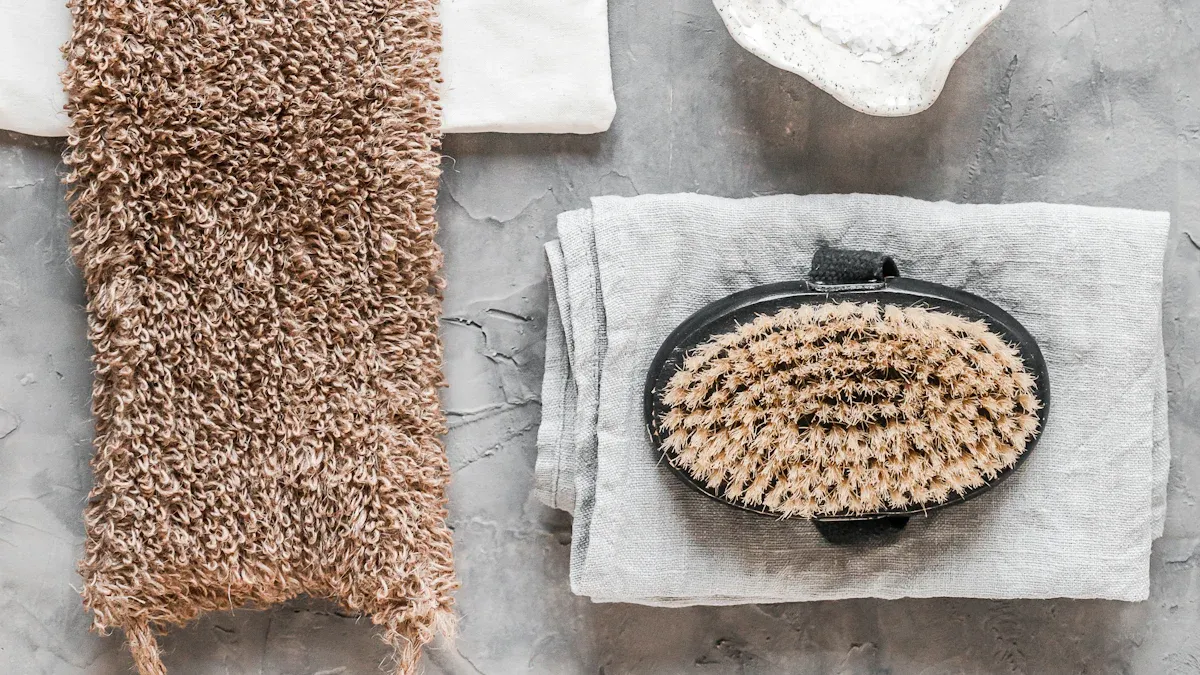
Sustainability has become a core requirement for buyers sourcing luxury towels and the best hotel towel collections. Many businesses now demand products that minimize environmental impact while maintaining high quality and luxury standards. The best hotel towel must combine comfort, durability, and responsible sourcing. Manufacturers offer several eco-friendly options, including organic cotton, bamboo fiber, and recycled yarns. These materials reduce resource consumption and support long-term environmental goals.
A growing number of buyers request certifications to verify the sustainability of their towels. The following table summarizes key criteria for eco-friendly towel certification:
Criteria | Description |
|---|---|
Certification Body | Green Seal or a third-party authorized by Green Seal. |
Recycled Content Requirement | Product must use 100% recycled content or alternative fibers. |
Alternative Fiber Options | Choices include 100% bamboo, agricultural residue, or blends of recycled content and bamboo. |
Hede Textile sources yarns from trusted suppliers who meet strict environmental standards. The factory offers organic cotton, bamboo, and recycled blends for luxury towels and luxurious and durable hotel towels. Each batch undergoes humidity and tensile strength checks to ensure consistent quality. Buyers can request documentation for material origin and certification, supporting transparency in the supply chain.
Buyers seeking luxurious and durable hotel towels should confirm the fiber content and certification before placing an order. This step ensures compliance with sustainability goals and supports brand reputation.
Green Packaging
Packaging plays a significant role in the environmental footprint of luxury towels and the best hotel towel products. Many buyers now require green packaging solutions that align with their sustainability policies. Options include biodegradable bags, recyclable boxes, and compression packaging that reduces shipping volume. These choices help minimize waste and support eco-friendly branding.
Hede Textile has adopted a pragmatic approach to green packaging. The factory offers biodegradable and recyclable materials for luxury towels and custom packaging for luxury branding. The packaging team collaborates with clients to select materials that balance protection, presentation, and sustainability. Buyers can choose eco-friendly bags, custom-printed boxes, or space-saving compression packs for luxurious and durable hotel towels.
Tip: Businesses should evaluate packaging options during the customization process. Green packaging not only protects towels but also enhances the luxury image and supports environmental responsibility.
Eco-friendly towels and packaging reflect a commitment to sustainability without compromising quality or luxury. Buyers who prioritize these features position their brands as leaders in responsible sourcing and innovation.
Industry Trends
Market Shifts
The towel industry continues to evolve as buyers demand higher standards for sustainability, performance, and user experience. Many businesses now prioritize eco-materials and advanced textile engineering when selecting a towel supplier. The shift toward plant-based and recycled content reflects a broader commitment to environmental responsibility. Suppliers have responded by developing towels that use organic cotton, bamboo, and recycled fibers, which appeal to both hospitality and retail sectors seeking luxury and sustainability.
Digital management tools have also transformed how buyers interact with suppliers. Real-time order tracking, digital approvals, and production transparency now play a central role in supplier selection. These tools help buyers monitor quality, reduce lead times, and ensure that every towel meets precise specifications. The integration of smart technologies, such as self-cleaning fibers and packaging that displays environmental impact, further enhances the value proposition for buyers focused on innovation and efficiency.
The following table highlights key trends shaping the towel sourcing landscape:
Trend/Innovation | Description |
|---|---|
Development of plant-based and recycled content options. | |
Smart technologies integration | Self-cleaning fibers and packaging that indicates environmental impact. |
Sustainable production methods | Biodegradable and compostable towel innovations. |
Advanced antimicrobial materials | Enhanced hygiene through new antimicrobial technologies. |
Quick-drying and odor-resistant fabrics | Fabrics engineered for rapid drying and odor resistance. |
Smart dispensing and storage solutions | Improved user experience through innovative dispensing and storage. |
Textile engineering | Enhanced durability and absorbency in towel products. |
Buyers should evaluate how these trends align with their business goals and customer expectations before choosing a towel supplier.
Innovation
Innovation in towel design and manufacturing continues to accelerate, offering buyers new ways to differentiate their products and enhance user satisfaction. Sustainable materials remain at the forefront, with suppliers introducing eco-friendly options that meet the growing demand for luxury and responsible sourcing. Advanced manufacturing processes, such as air spinning technology, produce towels that are softer, more absorbent, and longer-lasting.
Smart textiles represent another significant advancement. Some towels now feature embedded sensors that monitor moisture levels, supporting operational efficiency in hospitality and healthcare environments. Anti-microbial treatments have become standard for many luxury applications, providing added protection against bacteria and fungi. Customization and personalization options allow brands to create unique designs that reinforce identity and elevate the guest experience.
The table below summarizes recent innovations impacting towel supplier selection:
Innovation Type | Description |
|---|---|
Sustainable Materials | Eco-friendly materials for environmentally conscious consumers. |
Advanced Manufacturing Processes | Air spinning technology for softer, more durable towels. |
Smart Textiles | Embedded sensors for moisture monitoring and efficiency. |
Anti-microbial Treatments | Treatments that prevent bacteria and fungi growth. |
Customization and Personalization | Custom-designed towels to enhance brand identity and guest experience. |
Buyers who stay informed about these innovations can secure a competitive edge, ensuring their towels deliver both luxury and performance.
Key Points
Action Points
Buyers can strengthen their sourcing decisions and avoid common pitfalls by following a structured approach when selecting a towel supplier. The following action points summarize the most effective steps:
Tip: Regular supplier evaluations help identify issues early and improve overall business operations.
Top Five Steps for Supplier Reliability and Towel Quality
Step | Description |
|---|---|
1 | Keep Record of ISO Certifications: Maintain records of suppliers’ ISO certifications to ensure quality standards are met. |
2 | Understand Supplier’s Quality Processes: Review the supplier’s quality manual to understand their quality procedures and policies. |
3 | Use Supplier Questionnaires: Implement questionnaires to gather transparency and assess risk control in the supply chain. |
4 | Collect Objective Data on Supplier Performance: Use scorecards to track and evaluate supplier performance and compliance. |
5 | Create a Supplier Matrix: Develop a matrix to prioritize which suppliers to audit based on their processes and performance. |
Additional Actionable Lessons for Buyers
Confirm material specifications and certifications before placing an order.
Request samples to verify towel quality, absorbency, and colorfastness.
Clarify the supplier’s quality control process and request inspection documentation.
Review the supplier’s return and replacement policy for defective towels.
Evaluate shipping methods and export documentation for international orders.
Prioritize supplier partnerships that offer adaptability and continuous value.
Avoid focusing solely on cost, as this can lead to poor supplier performance.
Consider innovation and risk mitigation to reduce long-term operational costs.
Buyers who use a supplier evaluation checklist form stronger partnerships and minimize sourcing risks.
Common Sourcing Mistakes to Avoid
Prioritizing cost over quality often results in lower performance and higher long-term expenses.
Ignoring supplier innovation and risk control can increase operational challenges.
Overlooking regular supplier evaluations may allow issues to go unnoticed.
Buyers who follow these key takeaways position their businesses for reliable sourcing, consistent towel quality, and long-term supplier success.
Asking the right questions before ordering towels from any supplier remains essential for securing consistent quality, especially in luxury and high-usage environments. Thorough communication with a towel supplier leads to higher satisfaction and fewer order issues, as it aligns expectations and ensures timely deliveries. Buyers who use this checklist protect their investment, avoid common sourcing mistakes, and build reliable partnerships for every luxury towel project.
Strong supplier relationships and clear communication help maintain hygiene standards and deliver a superior experience for end users.
Hede Textile, with its long-term export experience and stable production capabilities, continues to be a dependable choice for bulk and custom towel programs worldwide. If you would like technical details, sampling support, or guidance on upcoming projects, Hede Textile’s export team is available to assist whenever needed.