Selecting the right towel supplier shapes business outcomes for importers and wholesalers. Reliable partners ensure consistent quality, timely deliveries, and strong reputation in competitive markets. Buyers often encounter challenges such as unstable GSM, fading colors, or late shipments.
High-quality towels create luxurious experiences and elevate brand reputation.
Durable products lower operational costs and reinforce a commitment to guest comfort.
Positive guest feedback and repeat business follow when towel standards remain high.
Decision-makers must ask how to evaluate supplier quality, assess reputation, and confirm customization capabilities. The following tips guide readers to make informed sourcing choices.
Key Takeaways
Evaluate towel supplier quality by checking their inspection systems and certifications.
Request recent inspection records and certification copies to verify supplier claims.
Check the reputation of suppliers through online reviews and direct reference checks.
Prioritize suppliers that offer a wide range of customization options to match your brand.
Compare total costs, not just unit prices, to understand the full procurement expenses.
Consider the long-term value of high-quality towels for guest satisfaction and durability.
Request samples to assess quality and ensure they meet your specific requirements.
Focus on suppliers with strong sustainability practices to enhance your brand’s reputation.
Towel Supplier Quality
Selecting a towel supplier with proven quality standards forms the foundation of any successful wholesale towels business. Buyers should examine several critical aspects to ensure consistent product quality and safeguard their reputation.
Material Standards
Cotton, Bamboo, Blends
A reputable towel manufacturer prioritizes raw material selection. High-grade cotton remains the industry benchmark for softness and absorbency. Some suppliers also offer bamboo or blended fibers for added sustainability or unique texture. Hede Textile, for example, sources cotton yarns from trusted regions and maintains strict checks on humidity and tensile strength. This attention to detail ensures towels meet both comfort and durability expectations.
GSM & Absorbency
GSM (grams per square meter) directly impacts towel quality. Higher GSM values indicate thicker, more absorbent towels, while lower GSM suits lightweight or travel products. Leading towel suppliers use digital systems to monitor GSM and absorbency, ensuring every batch aligns with client specifications. Consistent GSM prevents issues like uneven drying or premature wear, which can affect customer satisfaction.
Tip: Always request GSM and absorbency test results from your bulk towel supplier before confirming large orders.
Certifications & Compliance
OEKO-TEX, GOTS, SGS
Certifications validate a towel manufacturer’s commitment to safety and sustainability. International standards such as OEKO-TEX Standard 100 confirm the absence of harmful substances, making towels safe for all users. GOTS certification guarantees that at least 70% of fibers are organic and that ethical practices guide the entire production process. SGS and other third-party agencies provide independent verification of compliance.
Standard | Description |
|---|---|
Oeko-Tex | International product safety testing and certification for harmful chemicals |
ASTM D4772 – 14 | Test method for surface water absorption of terry fabric |
ASTM D5433 – 12 | Performance specifications for terry and non-terry towels |
GOTS | Certification for organic textiles, minimum 70% organic fibers |
International Benchmarks
Many leading towel suppliers also comply with ISO 9001 for quality management and ISO 14001 for environmental responsibility. BSCI certification demonstrates ethical labor practices. These benchmarks enhance consumer trust and support long-term business relationships.
OEKO-TEX Standard 100: Ensures safety for human use
ISO 9001: Guarantees consistent quality management
ISO 14001: Reflects environmental commitment
BSCI: Confirms ethical production standards
Inspection & Quality Control
Multi-Stage Checks
A reliable towel manufacturer implements multi-stage quality control. Hede Textile, for instance, inspects raw materials, monitors weaving and dyeing, and conducts final product audits. Each stage addresses specific risks, such as color deviation or seam defects, to maintain consistent product quality.
Traceability Systems
Modern towel suppliers use digital traceability systems. Each batch receives a unique code linked to its yarn source, loom, and dye lot. This system allows quick identification and resolution of any issues, reducing the risk of defective wholesale towels reaching the market.
Note: Traceability and transparent inspection records are essential for buyers seeking accountability from their towel supplier.
Supplier Reputation & Reviews
Selecting a towel supplier with a strong reputation is essential for businesses seeking reliable wholesale towels. Reputation reflects years of consistent performance, transparent operations, and the ability to meet diverse client needs. Buyers in industries such as hotels, healthcare, and retail often prioritize suppliers with proven track records and positive client reviews.
Business Experience
Years in Industry
A towel manufacturer with decades of experience demonstrates stability and expertise. Longevity in the market signals that the company has adapted to changing industry standards and maintained high towel quality. Hede Textile, for example, has operated for over 30 years, serving clients across multiple continents. This history reassures buyers that the supplier understands the complexities of international trade and can deliver consistent results.
Export Markets
Global reach enhances a supplier’s reputation. Companies exporting to regions like Europe, North America, and Japan must comply with strict quality and safety standards. A bulk towel supplier with a wide export network shows flexibility and the ability to meet varied market requirements. Buyers should request export records or market references to confirm the supplier’s experience in their target region.

Client Feedback & Case Studies
Online Reviews
Reviews provide valuable insights into a supplier’s reliability and service quality. Positive client reviews highlight strengths such as timely delivery, product consistency, and responsive support. Importers should examine testimonials on platforms like LinkedIn or industry directories. Consistent praise for towel quality and customer service indicates a trustworthy partner.
Reference Checks
Direct reference checks offer deeper understanding. Buyers can request contact details of previous clients or case studies that showcase successful collaborations. Speaking with other importers or hotels who have worked with the supplier helps verify claims and uncovers potential strengths or areas for improvement.
Tip: Always ask for recent client references and review feedback before finalizing a partnership with any towel supplier.
Communication & Service
Account Managers
Effective communication builds trust and strengthens partnerships. Suppliers who assign dedicated account managers provide personalized support throughout the order cycle. The following table summarizes how account managers influence client satisfaction:
Practice | Explanation |
|---|---|
Clients feel valued and informed, leading to higher satisfaction. | |
Regular updates build confidence | Clients appreciate transparency, which enhances trust in the supplier. |
Personalized communication improves experience | Tailored interactions make clients feel important and understood. |
Response Times
Prompt responses reflect professionalism and commitment. Leading towel suppliers maintain 24/7 support and provide regular production updates. Quick replies to inquiries and proactive alerts about order status help clients plan effectively and reduce uncertainty.
A supplier’s reputation depends on more than just product quality. Long-term partnerships, transparent communication, and positive testimonials all contribute to a reliable sourcing experience. Buyers should prioritize these factors when selecting a bulk towel supplier for their business.
Towel Manufacturer Customization
Customization stands as a critical factor when selecting a towel manufacturer. Businesses require towels that reflect their brand identity, meet market preferences, and deliver consistent product quality. Leading suppliers, such as Hede Textile, offer flexible customization options that support both large and small orders. This flexibility allows importers and wholesalers to respond quickly to market trends and customer feedback.
Design Options
Embroidery, Jacquard, Printing
A towel manufacturer must provide a wide range of design options to meet diverse client needs. Embroidery, jacquard weaving, and advanced printing techniques enable businesses to showcase logos, patterns, or unique color schemes. The following table summarizes the most requested customization features:
Customization Feature | Description |
|---|---|
Personalized Design | Showcase your brand’s image with custom designs. |
Embroidery | Individualize towels with logos or exclusive patterns. |
Printing | Add unique prints to towels for branding purposes. |
Create exclusive kitchen towels with your logo. | |
Range of Colors and Designs | Choose from a wide variety of colors and designs. |
Sizes | Available in various sizes to meet different needs. |
Private-Label Options | Design custom towels reflecting brand identity. |
Hotels, spas, and resorts often request private-label options to create a luxury experience for their guests. A bulk towel supplier with advanced embroidery and jacquard capabilities can deliver towels that elevate brand value and customer satisfaction.
Branding & Packaging
Branding extends beyond the towel itself. Leading towel manufacturers offer custom packaging, including eco-friendly bags, gift boxes, and branded labels. This attention to detail enhances the unboxing experience and reinforces the brand message. Hede Textile, for example, collaborates with clients to design packaging that aligns with market requirements and sustainability goals.
Order Flexibility
Small Batch Capability
Order flexibility plays a vital role in the decision-making process for businesses sourcing wholesale towels. The ability to place small batch orders reduces initial investment and financial risk. Companies can test new designs or respond to seasonal trends without overcommitting inventory. The table below highlights the benefits of small batch capability:
Benefit | Description |
|---|---|
Companies can start with smaller orders, reducing upfront costs and financial risk. | |
Faster Cash Flow Turnaround | Smaller orders lead to quicker production and sales, allowing for faster reinvestment of earnings. |
Less Waste, More Flexibility | Small batches help avoid overstocking and allow adjustments based on customer feedback. |
Affordable Brand Building | Customization options are available even in small quantities, enabling professional branding. |
Lead Times
Short lead times are essential for maintaining market agility. A towel supplier with efficient production and logistics can deliver both small and large orders promptly. Hede Textile operates around the clock, ensuring timely fulfillment and reliable delivery schedules.
Sample Service
Standard & Custom Samples
Samples play a key role in building trust between buyers and towel manufacturers. Standard samples allow clients to evaluate towel quality, texture, and color accuracy. Custom samples demonstrate the manufacturer’s ability to execute specific designs and branding requirements. Hede Textile provides both standard and custom samples, often within a week, to support informed purchasing decisions.
Pre-Production Approval
Pre-production approval ensures that the final product matches the client’s expectations. Buyers receive samples that match bulk quality before mass production begins. This process minimizes errors and guarantees consistent product quality across all shipments. Clear and transparent pricing accompanies every sample, allowing buyers to assess value before committing to larger orders.
Tip: Always request pre-production samples and confirm all specifications with your towel manufacturer to avoid misunderstandings and ensure premium quality cotton or egyptian cotton towels meet your standards.
A towel manufacturer that offers flexible customization options, small batch capability, and reliable sample service positions itself as a strategic partner for importers and wholesalers. These features support brand growth, market responsiveness, and long-term business success.
Pricing & Value
A well-structured pricing strategy helps businesses maximize value when sourcing wholesale towels. Buyers must evaluate not only the unit cost but also the total procurement expenses, including shipping and duties. Understanding these factors enables informed decisions and supports long-term partnerships with a reliable towel supplier.
Price Structure
Unit Cost vs. Total Cost
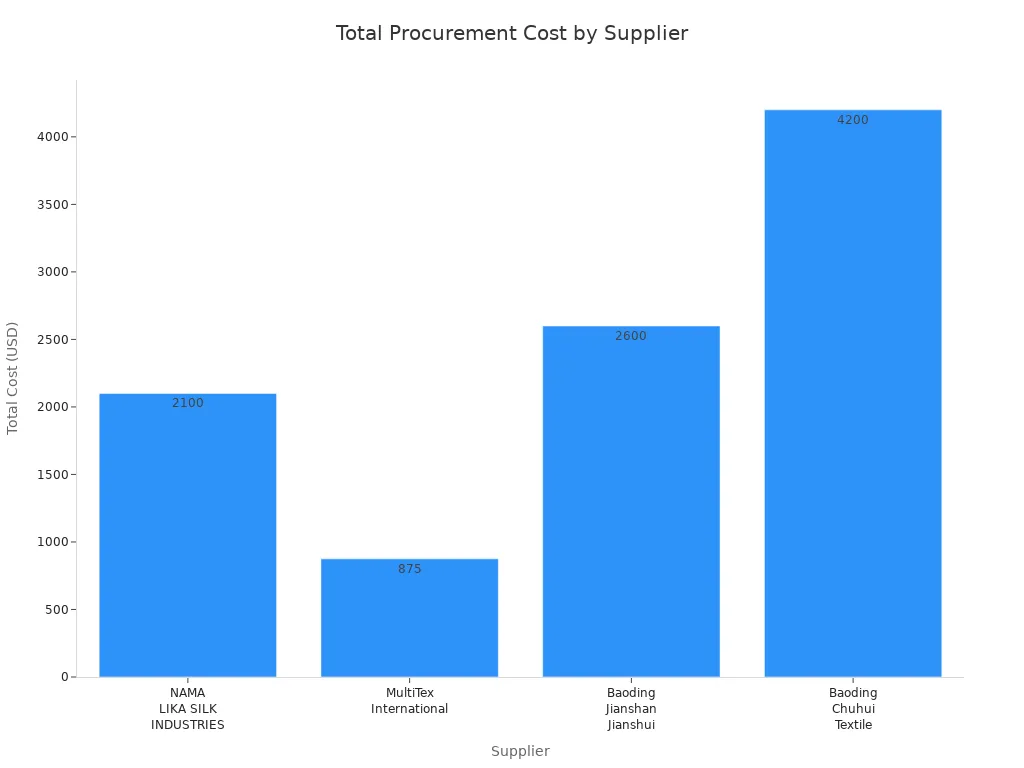
Unit cost often attracts initial attention, but total cost determines the real impact on budgets. Businesses should compare suppliers by considering material, minimum order quantity (MOQ), and additional services. The table below illustrates how different towel manufacturers structure their pricing:
Supplier | Material | MOQ | Unit Price (USD) | Notes |
|---|---|---|---|---|
NAMA LIKA SILK INDUSTRIES | 100% Cotton | 1,000 | $2.10 | Includes embroidery option; free shipping consultation |
MultiTex International | 80% Cotton / 20% Polyester | 500 | $1.75 | Lower MOQ ideal for startups; blended fabric reduces shrinkage |
Baoding Jianshan Jianshui E-Commerce Co. | Microfiber | 2,000 | $1.30 | Budget-friendly; suitable for promotional use or travel kits |
Baoding Chuhui Textile Manufacturing Co. | Organic Cotton | 1,500 | $2.80 | GOTS-certified; premium option for eco-conscious brands |
Shipping & Duties
Shipping fees and import duties can significantly affect total procurement costs. Buyers should request detailed quotations that specify these charges. Transparent communication about logistics prevents unexpected expenses and supports accurate budgeting for hotels and retail chains.
Cost vs. Quality
Avoiding Low-Quality Risks
The relationship between price and quality remains critical. Higher-quality hotel towels often command a premium due to superior materials and durability. Businesses evaluate this trade-off by considering comfort, longevity, and the long-term value that quality towels provide. Investing in quality reduces replacement frequency and enhances guest satisfaction, especially in luxury hospitality settings.
Negotiation Tips
Negotiation plays a key role in achieving the best value. Buyers should leverage positive client reviews and testimonials to understand supplier flexibility. Requesting samples allows for direct assessment of product quality before committing to large orders. Clear and transparent pricing from the towel supplier ensures both parties understand expectations and reduces the risk of disputes.
Tip: Always compare total landed costs, not just unit prices, and confirm all terms in writing.
Transparent Quotations
Documentation & Risk Control
Reliable towel manufacturers provide transparent quotations with full documentation. Hede Textile, for example, includes risk disclaimers in pro forma invoices and packing lists. This practice protects both buyer and supplier from unforeseen issues such as shipping delays or minor color variations. Comprehensive documentation supports smooth customs clearance and builds trust in international transactions.
A focus on pricing and value helps businesses secure quality hotel towels at competitive rates. By prioritizing transparency, clear communication, and thorough documentation, buyers can establish strong, long-term relationships with their chosen towel supplier.
Sustainability & Ethical Practices

Sustainability plays a central role in the modern textile industry. Buyers increasingly expect their towel supplier to demonstrate responsible sourcing, ethical labor, and environmental stewardship. These practices not only protect the planet but also enhance sustainability and supplier reputation in global markets.
Eco Materials
Organic & Recycled Fibers
Many leading towel suppliers now prioritize organic and recycled fibers. Organic cotton reduces chemical use and supports healthier farming communities. Recycled yarns help minimize waste and conserve resources. Hede Textile sources certified organic and recycled materials for clients who value eco-friendly products. This approach aligns with international standards and meets the expectations of environmentally conscious buyers.
Eco-Friendly Packaging
Packaging choices reflect a supplier’s commitment to sustainability. Options such as biodegradable bags, recycled paper boxes, and minimal plastic use help reduce environmental impact. Hede Textile offers flexible customization options for packaging, allowing brands to reinforce their green values. These solutions support both product protection and responsible branding.
Labor & Safety Standards
QHSE Practices
Quality, Health, Safety, and Environment (QHSE) practices form the backbone of ethical production. A reputable towel supplier invests in safe working conditions, regular safety training, and compliance with international labor standards. Hede Textile implements QHSE protocols throughout its operations, ensuring that every employee works in a secure and healthy environment.
Employee Welfare
Employee welfare drives long-term quality and reliability. Suppliers who provide fair wages, health checks, and comfortable facilities retain skilled workers. Hede Textile’s low staff turnover reflects its commitment to employee well-being. This stability translates into consistent product quality and dependable service for buyers.
Environmental Responsibility
Water & Energy Management
Water and energy management remain critical for reducing a factory’s ecological footprint. Some towel suppliers adopt innovative practices, such as partnering with dyeing facilities that use advanced filtration and recycling systems. Others streamline production to minimize resource consumption. For example, switching to disposable towels in certain industries can eliminate laundering, saving thousands of gallons of water and reducing energy use each month. These strategies demonstrate a practical commitment to sustainability.
Waste Reduction
Waste reduction supports both environmental and economic goals. Leading suppliers collect and repurpose cotton waste, optimize cutting processes, and transition to recyclable packaging. Hede Textile’s pragmatic approach ensures that waste management aligns with both client requirements and global standards.
Note: Buyers should request samples that match bulk quality to verify that eco-friendly practices do not compromise performance.
A towel supplier who integrates sustainability into every stage of production builds trust and long-term value for clients. Responsible sourcing, ethical labor, and environmental responsibility now define the industry’s highest standards.
Industry Trends
The towel supplier landscape continues to evolve as buyers demand higher standards in quality, efficiency, and environmental responsibility. Industry leaders now focus on integrating advanced sourcing, customization, and logistics practices to meet the needs of hotels, retailers, and institutional clients. Understanding these trends helps buyers select a towel supplier that aligns with modern expectations and long-term business goals.
Sustainable Sourcing
Sustainability has become a defining factor for every towel supplier aiming to remain competitive. The industry now sees several key developments:
Increased use of sustainable cotton, including organic and Better Cotton Initiative (BCI) certified options.
Growing consumer expectations for ethical sourcing, where luxury and integrity go hand in hand.
Redefinition of luxury to emphasize both comfort and responsible production, with eco-cotton providing a sense of confidence.
Adoption of regenerative cotton practices that restore ecosystems and minimize environmental impact.
Implementation of textile traceability, circular recycling systems, and waterless dyeing processes.
These practices allow a towel supplier to deliver products that meet both regulatory requirements and consumer values. Buyers benefit from greater transparency and can confidently market their products as eco-friendly.
Customization Technology
Customization technology now plays a crucial role in product differentiation for every towel supplier. Recent advancements include:
Integration of robotics in manufacturing, which improves accuracy and quality control while enabling faster production cycles.
Adoption of digital printing methods, such as Direct-to-Garment (DTG) printing, which allows for vivid, detailed designs tailored to specific customer needs.
Use of digital design apps that streamline the creation and implementation of custom patterns.
Agile production workflows, including needs assessment and rapid sampling, ensure that customer requirements are met efficiently.
Leading brands now focus on user-centered designs and offer customizable options using organic and recycled materials.
These innovations help a towel supplier respond quickly to market trends and deliver unique products that stand out in competitive environments.
Logistics Efficiency
Efficient logistics have become essential for any towel supplier seeking to reduce lead times and shipping costs. The following table highlights recent improvements:
Improvement Type | Description |
|---|---|
Inventory Management | Advanced forecasting tools optimize inventory turnover and reduce costs. |
Shipping Processes | Streamlined shipping ensures fast, accurate delivery and minimizes delays. |
3PL Partnership | Collaboration with third-party logistics providers enhances efficiency. |
Demand Forecasting | Predictive analytics help manage stock levels and anticipate demand. |
These strategies enable a towel supplier to maintain reliable delivery schedules and support buyers in planning their inventory more effectively.
Note: Buyers should look for a towel supplier that demonstrates leadership in sustainable sourcing, advanced customization, and logistics efficiency. These trends ensure long-term value and support responsible business growth.
Current industry trends highlight the shift toward eco-materials, innovative dyeing techniques, and smarter packaging solutions. Buyers who partner with a forward-thinking towel supplier gain access to products that meet modern standards for quality, sustainability, and operational efficiency.
Key Takeaways
Assess Towel Supplier Quality
Buyers should evaluate towel supplier quality using a structured approach. Industry experts recommend focusing on inspection systems, certifications, third-party testing, production capacity, material quality, and sustainability practices. The following table summarizes the most important criteria:
Criteria | Description |
|---|---|
Inspection Systems | Multi-stage inspections, including AQL checks for weaving, color, pile, and stitching. |
Certifications | International certifications like OEKO-TEX and ISO validate safety and quality standards. |
Third-party Testing | Independent audits and laboratory tests confirm product reliability. |
Production Capacity | Ability to meet demand with flexible order sizes and customization. |
Material Quality | Use of premium materials such as organic cotton and bamboo fibers. |
Sustainability Practices | Eco-friendly initiatives like water recycling and waste reduction. |
A towel supplier that meets these criteria consistently delivers high-quality products. Buyers should request documentation and test reports to confirm compliance. Regular quality checks and transparent processes help prevent issues before shipment.
Tip: Always ask for recent inspection records and certification copies to verify claims.
Check Reputation & Reviews
Verifying the reputation and reliability of a towel supplier protects buyers from potential risks. Businesses should take several practical steps:
Check articles of incorporation and business licenses.
Confirm tax information and validate credentials.
Gather contact information, including email and phone numbers.
Ensure insurance and fraud protection solutions are in place.
In addition, buyers benefit from a structured review process:
Conduct on-site factory visits to assess operational readiness.
Evaluate the level of automation in quality control.
Meet the delivery team to understand their capabilities.
Check for valid, up-to-date certifications.
These steps help buyers confirm the towel supplier’s legitimacy and operational strength. Positive client reviews and transparent communication further reinforce trust.
Prioritize Customization
Customization remains a key differentiator in the towel industry. Businesses value suppliers who offer a wide range of options to match their brand and market needs. The table below highlights the most valued customization features:
Customization Feature | Description |
|---|---|
Sizes | Towels available in various dimensions. |
Fabrics | Selection of different materials for specific uses. |
Colors | Custom color options tailored to brand identity. |
Embroidery & Branding | Monograms or corporate logos for brand recognition. |
Screen Printing | Personalized designs for events or promotions. |
Woven Labels & Packaging | Professional finishes for enhanced appeal. |
Custom Colors & Patterns | Tailored designs for unique requirements. |
A towel supplier with strong customization capabilities supports brand growth and market differentiation. Buyers should request samples and review design portfolios to ensure the supplier can deliver on specific requirements.
Note: Customization options, combined with clear and transparent pricing, help businesses manage costs and maintain brand consistency.
Compare Pricing & Value
Businesses seeking the best hotel towels must evaluate pricing and value with a structured approach. Comparing multiple towel suppliers helps buyers secure cost-effective solutions without sacrificing bath towel quality. The process involves more than checking unit prices. Companies must consider total procurement costs, supply consistency, and the range of available options.
A practical comparison often includes the following steps:
Choose reliable suppliers with positive reviews and a reputation for delivering luxury hotel towels.
Explore both online and local options to identify competitive pricing and service levels.
Consider customizable options, such as branded towels or unique sizes, to meet specific requirements for 5-star luxury hotels.
Procurement teams benefit from analyzing the advantages of bulk purchasing. Bulk orders ensure a consistent supply, which reduces the risk of running out during peak seasons. Although the initial investment may appear high, bulk purchases often come with discounted rates, resulting in long-term savings. Suppliers typically offer a variety of bulk towel options at different price points, allowing buyers to select the best quality towels for the pool or guest rooms while staying within budget.
The following table summarizes key factors to compare when evaluating towel suppliers:
Factor | Description |
|---|---|
Unit Price | Cost per towel, including any discounts for bulk orders |
Total Cost | Includes shipping, duties, and additional services |
Supply Consistency | Ability to deliver steady stock during high-demand periods |
Customization Options | Availability of branded or custom-sized towels |
Payment Terms | Flexibility in payment schedules and credit options |
Tip: Always request detailed quotations that break down all costs. This transparency helps prevent unexpected expenses and supports accurate budgeting.
Buyers should also assess the value offered by each hotel towel supplier. High-quality towels may require a higher upfront investment, but they deliver greater durability and guest satisfaction. Investing in premium products reduces replacement frequency and enhances the reputation of hospitality businesses. For 5-star luxury hotels, the focus remains on bath towel quality and the overall guest experience.
Selecting the right towel supplier drives business growth and customer satisfaction. Companies should focus on five key areas: quality, reputation, customization, value, and sustainability. The table below highlights how each factor contributes to long-term success:
Factor | Contribution to Growth and Satisfaction |
|---|---|
High-Quality Products | Reliable towels meet customer expectations and reduce replacement costs. |
Ethical Sourcing | Responsible practices build brand loyalty and trust. |
Wide Range of Options | Customization attracts diverse markets and increases demand. |
Reliable Delivery | Timely shipments prevent disruptions and improve client experience. |
Strong Customer Service | Support fosters repeat business and lasting partnerships. |
By applying these steps, businesses avoid common mistakes such as chasing low prices or ignoring sample quality. Many brands report lower long-term costs and increased repeat orders after choosing reputable towel suppliers. For bulk or custom towel projects, contact Hede Textile’s export team at www.hedetowel.com.