


Mistakes in ordering a custom hand towel can result in wasted time, increased costs, or poor product performance. Both experienced importers and new buyers often overlook key details, such as confirming towel quality, verifying GSM stability, or ensuring on-time delivery. Many industry experts point out that failing to check materials, clarify pricing, or understand shipping logistics can lead to dissatisfaction.
Buyers of promotional hand towels frequently encounter challenges like fading colors or unexpected shipment delays. By understanding these risks, readers can make informed decisions, secure reliable quality, and maximize the value of their promotional hand towels. Careful attention at the start helps prevent costly issues later.
Key Points
Confirm fabric quality and GSM before ordering. High-quality cotton and a GSM of 400-600 ensure softness and absorbency.
Request colorfastness reports to prevent fading. Testing should be thorough to maintain brand reputation.
Communicate customization details clearly. Provide digital mockups and written instructions to avoid misunderstandings.
Always approve pre-production samples. This step helps verify color, size, and quality before mass production.
Understand the intended use of the towels. Different applications require specific features for optimal performance.
Verify the supplier’s quality control processes. Ensure they maintain strict standards and provide documentation for every batch.
Consider packaging and labeling early in the process. Proper packaging enhances brand perception and ensures compliance.
Stay informed about industry trends. Eco-friendly materials and digital management can improve quality and sustainability.
Mistake 1: Custom Hand Towel Fabric Quality
Selecting the right fabric quality sets the foundation for a successful custom hand towel order. Buyers who overlook this step risk receiving towels that underperform or fail to meet end-user expectations. Leading manufacturers like Hede Textile invest in high-quality yarn sourcing and strict quality control to ensure every towel delivers comfort, absorbency, and durability.
Material Selection
Material choice directly affects the towel’s softness, absorbency, and overall feel. Cotton remains the most popular option due to its natural softness and strong water absorption. Some buyers request blends with bamboo or modal fibers for added softness or eco-friendly appeal. However, low-grade yarns or synthetic-heavy blends can result in rough, less absorbent towels. Buyers should always request clear material specifications and ask suppliers about yarn origin and quality checks.
Tip: Request documentation on yarn source and fiber content before confirming your order.
Fabric Feel and Absorbency
The tactile experience of a custom hand towel matters for both comfort and function. High-quality towels feel plush and absorb moisture quickly. Poor material choices can lead to towels that feel stiff or fail to dry hands effectively. Industry standards help buyers assess these qualities. For example, ASTM D4772-14 measures surface water absorption, while Oeko-Tex certification ensures the fabric is free from harmful chemicals.
Standard | Description |
|---|---|
GOTS Certification | Requires a minimum of 70% organic fibers and annual inspections for compliance. |
Oeko-Tex | Evaluates towels for harmful chemicals, ensuring compliance with safety standards. |
ASTM D4772 – 14 | Tests the surface water absorption of terry fabric. |
ASTM D5433 – 12 | Covers performance specs like breaking strength and colorfastness. |
Durability Concerns
Durability determines how well a towel withstands repeated washing and daily use. Inferior yarns or loose weaving can cause fraying, pilling, or loss of shape. Hede Textile addresses this by using trusted yarn suppliers and multi-stage inspections throughout production. Buyers should ask about the supplier’s quality control process and request test reports for breaking strength and colorfastness, such as those outlined in ASTM D5433-12.
Note: Always verify that the supplier follows recognized industry standards and can provide relevant certifications or test results.
By focusing on material selection, fabric feel, and durability, buyers can avoid costly mistakes and ensure their custom hand towel meets both brand and user expectations.
Mistake 2: Overlooking GSM and Weight
Choosing the right GSM and weight is essential for any custom hand towel order. Many buyers underestimate the importance of GSM, which stands for “grams per square meter.” This measurement directly influences the towel’s thickness, absorbency, and durability. When buyers overlook GSM, they risk receiving custom hand towels that feel thin, lack plushness, or fail to perform in demanding environments.
GSM Basics
GSM serves as the industry standard for measuring towel density. A higher GSM indicates a heavier, thicker towel, while a lower GSM means the towel is lighter and less substantial. Manufacturers like Hede Textile use GSM as a baseline for quality control and product specification. Buyers should always ask suppliers to specify the GSM of their custom hand towel before confirming an order.
Tip: Request a physical sample or a GSM test report to verify the actual weight and feel of the custom hand towel.
The following table summarizes how different GSM ranges affect absorbency and durability based on laboratory testing:
GSM Range | Absorbency and Durability Impact |
|---|---|
300-400 GSM | Low absorbency and durability |
400-600 GSM | Medium absorbency and durability |
500-700 GSM | Optimal absorbency and durability, top performers |
600-900 GSM | High absorbency and durability, plushness increases |
Weight and Performance
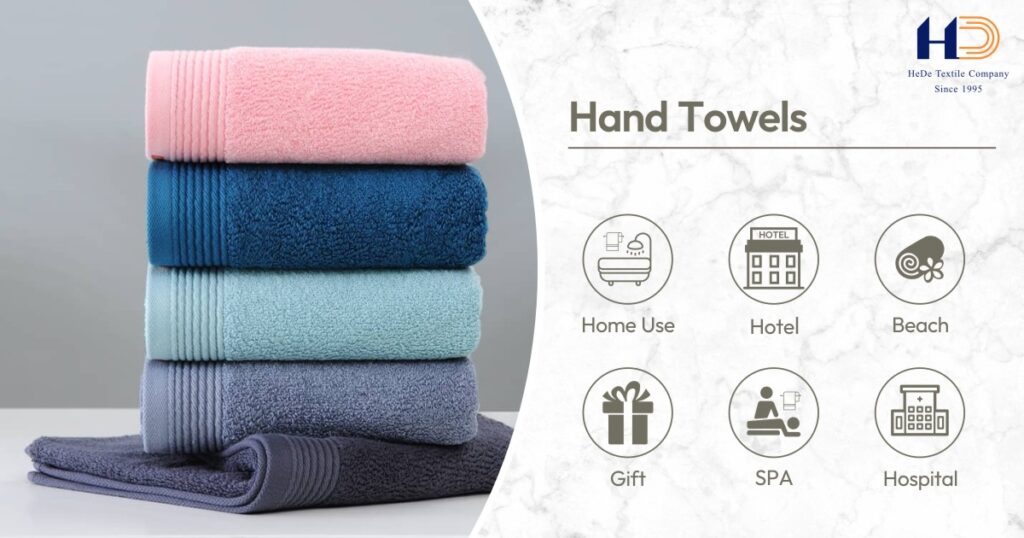
The weight of a custom hand towel determines its performance in real-world use. Towels with low GSM often feel flimsy and may not withstand frequent washing. In contrast, towels with higher GSM offer superior absorbency and a luxurious feel. Hospitality buyers typically prefer custom hand towels in the 500–700 GSM range for optimal comfort and longevity. Promotional buyers may choose lighter weights for cost efficiency, but must balance price with user satisfaction.
A well-chosen GSM ensures the custom hand towel meets the expectations of its intended audience. For example, a spa or hotel guest expects a plush, absorbent towel, while a promotional event may require a lighter, more economical option. Buyers should match GSM to the towel’s application to avoid disappointment.
Confirming GSM with Suppliers
Verifying GSM with suppliers is a critical step in the ordering process. Reliable manufacturers, such as Hede Textile, provide detailed specifications and can supply test reports or samples for confirmation. Buyers should communicate their GSM requirements clearly and request documentation to ensure consistency across batches.
Note: Always confirm GSM in writing and ask for a pre-production sample to check the actual weight and texture of the custom hand towel.
A transparent GSM confirmation process helps buyers avoid surprises and ensures the final product aligns with their brand standards. By prioritizing GSM and weight, buyers can secure custom hand towels that deliver both quality and value.
Mistake 3: Ignoring Towel Size
Selecting the correct towel size is a critical step in any custom hand towel order. Many buyers overlook this detail, resulting in products that do not fit their intended use or fail to meet customer expectations. Towel size directly affects user experience, brand perception, and even cost efficiency. Understanding standard dimensions, matching size to application, and exploring custom sizing options can help buyers avoid costly errors.
Standard Hand Towel Sizes
Hand towels come in a range of standard sizes, especially in the hospitality and promotional sectors. The most common dimensions fall between 16 inches by 28 inches and 18 inches by 30 inches. These sizes offer a balance between practicality and comfort, making them suitable for a variety of settings.
Towel Type | Size in Inches (Width x Length) | Size in Centimeters (Width x Length) | Primary Use |
|---|---|---|---|
Hand Towel | 16″ x 28″ to 18″ x 30″ | 40 x 70 cm to 45 x 75 cm | Drying hands |
Buyers should confirm the exact measurements with their supplier before placing an order. Even a small deviation can impact how the towel fits on racks, in packaging, or within branded sets.
Matching Size to Use
Different towel sizes serve specific functions across industries. Selecting the right size ensures the towel performs as intended and enhances user satisfaction. For example:
Bath towels, with larger dimensions, provide full coverage and comfort after bathing.
Hand towels, smaller in size, work best for drying hands in restrooms or kitchens.
Beach towels, much larger, offer space for lounging by the pool or at the beach.
Microfiber towels, available in various sizes, excel in cleaning and detailing tasks.
A hospitality buyer may require a standard hand towel for guest bathrooms, while a promotional buyer might prefer a slightly smaller or lighter towel for event giveaways. Matching the towel size to its application helps maintain brand standards and meets end-user needs.
Tip: Always consider where and how the towel will be used before finalizing the size. This step prevents mismatches and ensures a positive user experience.
Custom Sizing Options
Some projects demand unique dimensions beyond standard sizes. Custom sizing allows brands to tailor towels for special applications, packaging requirements, or distinctive branding. Manufacturers like Hede Textile offer flexible production capabilities, enabling buyers to specify exact measurements for their orders.
Personalizing cotton towels with custom sizes can set a brand apart in the market. For example, a spa may request a slightly longer hand towel for added luxury, while a fitness brand might choose a compact size for gym bags. Buyers should communicate their sizing needs clearly during the design phase and request a sample to verify the final product.
Custom sizing not only supports branding but also optimizes cost and functionality. By understanding standard sizes, matching them to intended use, and exploring custom options, buyers can avoid the common mistake of ignoring towel size and achieve better results with every order.
Mistake 4: Neglecting Pile and Weave
Choosing the right pile and weave is a critical step in ordering a custom hand towel. Many buyers focus on material and GSM but overlook how pile height and weave type affect comfort, absorbency, and long-term performance. Understanding these elements helps ensure the custom hand towel meets both brand and user expectations.
Pile Height and Comfort
Pile height refers to the length of the loops or fibers that stand up from the towel’s base fabric. This feature directly impacts the softness and plushness of a custom hand towel. Terry cloth, a popular choice for custom hand towels, uses uncut loops to create a soft, loopy texture that feels gentle on the skin. Cut pile towels, known for their velvety surface, offer enhanced comfort and superior water absorption. Untwisted towels provide a fluffy feel and excellent absorbency, but their comfort depends on precise manufacturing.
Towel Type | Characteristics | Comfort Impact |
|---|---|---|
Cut Pile | Softness, comfort, better water absorption | Increases comfort due to softness |
Untwisted | Fluffy feel, improved absorbency, variable comfort | Comfort varies with manufacturing |
Terry Cloth | Highly absorbent, soft, loopy texture | Generally very comfortable |
A custom hand towel with the right pile height delivers a luxurious experience, making it suitable for hospitality, spa, or premium promotional use.
Weave Types for Custom Hand Towels
The weave type determines the towel’s texture, durability, and appearance. Terry weave remains the industry standard for custom hand towels because of its high absorbency and soft feel. Jacquard weave allows for intricate patterns and branding, making it ideal for custom designs. Plain weave produces a lighter, more durable towel, often used for promotional or travel purposes. Velour weave, created by shearing the loops, results in a smooth, plush surface that appeals to luxury markets.
Terry Weave: Features uncut loops for maximum absorbency and softness.
Jacquard Weave: Enables custom patterns and logos woven directly into the fabric.
Plain Weave: Offers lightweight durability, suitable for cost-effective custom hand towels.
Velour Weave: Provides a smooth, elegant finish, perfect for high-end branding.
Selecting the appropriate weave ensures the custom hand towel aligns with the intended use and brand image.
Impact on Absorbency
Absorbency stands as one of the most important qualities in a custom hand towel. Structural characteristics such as pile height, yarn type, and weave construction play a significant role in how much moisture the towel can absorb. For example, terry towels with longer pile and zero-twist yarns demonstrate superior moisture absorption. Fabric weight and thickness also contribute to absorbency, with heavier towels generally performing better.
Pile height and yarn type influence how much water a custom hand towel can hold.
Different materials and construction methods create variations in moisture absorption.
Repeated laundering can affect absorbency, so buyers should consider durability as well.
Buyers should always specify their absorbency requirements and request samples to test performance before placing a bulk order. Reliable manufacturers like Hede Textile can provide guidance on the best pile and weave combinations for each application.
Tip: Always discuss pile height, weave type, and absorbency expectations with your supplier to ensure your custom hand towel delivers the desired user experience.
Mistake 5: Skipping Colorfastness Checks
Colorfastness stands as a critical factor in the long-term appearance and value of promotional hand towels. Many buyers overlook this detail, leading to towels that fade, bleed, or lose vibrancy after just a few washes. Skipping colorfastness checks can result in negative brand impressions, especially when personalizing cotton towels for events or retail.
Dye Quality
Dye quality directly impacts how well a custom hand towel retains its color. High-grade dyes, such as those used in professional textile manufacturing, bond tightly with cotton fibers. This process ensures that colors remain vivid and consistent, even after repeated laundering. Inferior dyes may save costs upfront but often cause uneven fading or color transfer. Reliable suppliers partner with advanced dyeing facilities to maintain strict control over dye selection and application. When ordering promotional hand towels, buyers should always inquire about the type of dyes used and the supplier’s color management process.
Tip: Request information about the dyeing process and ask for references to previous projects with similar color requirements.
Color Stability in Use
Color stability refers to a towel’s ability to maintain its original shade during daily use and washing. Factors such as water temperature, detergent type, and exposure to sunlight can all affect color retention. Custom-branded towels used in hospitality or sports settings face frequent washing and handling, making color stability even more important. Towels that lose color quickly can harm a brand’s reputation and reduce the perceived quality of promotional hand towels. Buyers should specify their expectations for color stability and request samples for wash testing before confirming large orders.
Color Fastness Inspection
Color Fastness Checks
These steps help ensure that the final product meets both visual and functional standards.
Testing and Certification
Certifications provide assurance that a custom hand towel meets recognized quality and safety benchmarks. Leading manufacturers conduct rigorous colorfastness tests, including assessments for washing, rubbing, and light exposure. Buyers should look for suppliers who can provide test reports and certifications from reputable organizations. The following table summarizes key certifications relevant to colorfastness and overall towel quality:
Certification | Purpose |
|---|---|
ISO9001 | Quality management systems |
ISO14001 | Environmental management systems |
Sedex | Ethical supply chain practices |
OEKO-TEX | Safety and environmental standards |
Requesting these certifications helps buyers verify that their promotional hand towels will perform as expected. When personalizing cotton towels, certifications such as OEKO-TEX also ensure the product is safe for end users and environmentally responsible.
Note: Always ask for colorfastness test results and certification copies before approving bulk production.
By prioritizing dye quality, color stability, and proper certification, buyers can avoid the costly mistake of skipping colorfastness checks. This approach protects brand image and ensures every custom hand towel delivers lasting value.
Mistake 6: Poor Customization Planning
Clear customization planning stands as a cornerstone for successful promotional hand towels and custom-branded towels. Many buyers underestimate the importance of precise communication when personalizing cotton towels, which can lead to costly errors, production delays, or unsatisfactory results. Effective planning ensures that every detail, from design to embroidery, aligns with brand goals and user expectations.
Design and Branding Choices
Design and branding decisions shape the visual impact and usability of promotional hand towels. Buyers should prioritize clarity and readability in their designs. Selecting a generous font size prevents visibility issues on plush terry cloth. High-contrast color combinations enhance logo recognition and brand recall. Before finalizing a design, buyers should always request digital proofs and physical prototypes to evaluate how the artwork appears on the actual towel surface.
Tip: Always test samples and approve layouts before mass production. Check font size, spacing, and contrast for clarity.
A well-planned design not only elevates brand image but also ensures the towel remains functional and attractive after repeated use.
Embroidery Preparation
Embroidery adds a premium touch to custom hand towel orders, but it requires careful preparation. Buyers should specify exact placement measurements for logos or monograms to guarantee visibility and protect the design from excessive wear. Alignment and thread color must match the towel’s base color for a cohesive look. Reviewing digital proofs and confirming all details before production helps avoid misunderstandings.
Choose a clear font and monogram style that suits the towel’s texture.
Specify placement and orientation for embroidery.
Confirm thread type and color to match branding.
Review digital proofs and approve samples before bulk production.
Hede Textile’s design-to-production workflow exemplifies best practices in embroidery planning. The in-house team collaborates with clients to turn sketches into production-ready files, ensuring every detail meets expectations.
Overly Complex Patterns
Complex patterns can increase both production time and cost for promotional hand towels. Intricate designs may require advanced embroidery techniques, leading to longer lead times—often between two to four weeks depending on order volume and complexity. Highly detailed artwork can also affect towel softness and absorbency, as dense stitching may stiffen the fabric.
Buyers should balance design ambition with practicality. Simple, bold graphics often deliver better results on terry cloth. Testing samples helps identify potential issues with clarity or texture before committing to full production.
Production time and cost rise with design complexity.
Dense embroidery may reduce towel softness and absorbency.
Prototyping ensures the final product meets both aesthetic and functional standards.
By planning customization carefully and communicating requirements clearly, buyers can avoid common pitfalls and achieve outstanding results with every custom hand towel order.
Mistake 7: Not Considering Intended Use
Selecting a custom hand towel without a clear understanding of its intended use often leads to mismatched features, wasted resources, and dissatisfied end-users. Buyers must align every specification with the towel’s final application. This approach ensures the custom hand towel delivers both functional and branding value.
Hospitality vs. Promotional Hand Towels
Hospitality and promotional sectors demand different qualities from a custom hand towel. Hotels, spas, and resorts require towels that withstand frequent laundering, maintain softness, and project a sense of luxury. These settings often specify higher GSM, premium cotton, and elegant finishes. In contrast, promotional hand towels focus on cost efficiency, branding visibility, and bulk distribution. Companies may prioritize lighter weights, vibrant colors, and bold logos for events or giveaways.
A hospitality buyer expects a custom hand towel to impress guests and reinforce the property’s reputation. A promotional buyer seeks maximum brand exposure at a competitive price. Understanding these differences helps buyers select the right material, size, and customization options for each scenario.
Tip: Always communicate the primary use of your custom hand towel to your supplier. This step ensures the product matches both performance and branding goals.
End-User Needs
End-user preferences play a critical role in shaping the features of a custom hand towel. Buyers who consider these needs achieve higher satisfaction rates and stronger brand loyalty. Key end-user priorities include:
Softness for comfort and a pleasant tactile experience
High absorbency for effective drying
Durability to withstand repeated washing and daily use
Aesthetic appeal that matches the setting or event
Preferences shift based on context. Home users may value plushness and style, while commercial users focus on longevity and easy maintenance. Special occasions, such as weddings or sports events, often require unique designs or packaging. High-quality custom hand towels enhance user experience by providing comfort and convenience.
Application-Specific Features
Each application demands specific features from a custom hand towel. Hospitality towels benefit from double-stitched hems, anti-pilling finishes, and neutral color palettes that suit diverse interiors. Promotional towels often feature custom embroidery, printed logos, or unique shapes to capture attention. Healthcare and fitness sectors may require antimicrobial treatments or quick-dry fabrics.
Buyers should assess the following when specifying a custom hand towel:
Application | Key Features |
|---|---|
Hospitality | High GSM, premium cotton, elegant borders |
Promotional | Lightweight, bold branding, cost-effective |
Healthcare | Antimicrobial, hypoallergenic, easy-care |
Sports/Fitness | Quick-dry, compact size, moisture-wicking |
Matching features to the intended use ensures the custom hand towel performs as expected and supports the brand’s objectives. Suppliers like Hede Textile offer tailored solutions for each segment, helping buyers avoid costly mismatches.
By considering intended use, end-user needs, and application-specific features, buyers can confidently select a custom hand towel that delivers value, durability, and brand impact.
Mistake 8: Overlooking Packaging and Labeling
Packaging and labeling play a crucial role in the success of any custom hand towel order. Many buyers focus on material and design but neglect how the product arrives and presents itself to the end user. Proper packaging not only protects the custom hand towel during transit but also enhances brand perception and ensures compliance with international regulations.
Packaging Options
Buyers have a wide range of packaging options for custom hand towels. The right choice depends on the target market, brand positioning, and intended use. In retail and hospitality, packaging serves both functional and marketing purposes. A well-packaged custom hand towel can elevate the unboxing experience and reinforce brand identity.
Description | |
|---|---|
Wrapping Sheets | Simple and functional, ideal for bulk packaging. |
Sleeves | Stylish and customizable, enhancing brand visibility. |
Boxes with Inserts | Offers protection and can be designed to attract customers. |
Luxury Towel Packaging | High-end packaging that enhances the perceived value of the towels. |
Custom-Printed Towel Belly Bands | Adds a personal touch and promotes branding. |
Packaging Sleeves for Towels | Lightweight and easy to handle, suitable for retail displays. |
Kraft Packing Box with PVC Window | Allows visibility of the product while maintaining a professional look. |
Foldable Transparent Window Box | Convenient for storage and display, with handles for easy carrying. |
Custom Logo Design Rigid Lid Towel Box | Premium packaging option that emphasizes branding and quality. |
Ecofriendly Recycled Paper Label Sleeve | Sustainable option appealing to environmentally conscious consumers. |
Many brands choose custom logo cotton towel plastic bags, kraft packing boxes with PVC windows, or ecofriendly recycled paper label sleeves. In the hospitality sector, personalized packaging with embroidered towels creates a memorable guest experience and strengthens brand loyalty.
Branding and Compliance
Labeling requirements for custom hand towels vary by market. Buyers must ensure every product meets international standards to avoid customs issues or legal complications. Labels must provide clear information about fiber content, country of origin, manufacturer identification, and care instructions. Permanent, legible labels are essential for product life and consumer trust.
Requirement | Details |
|---|---|
Fiber Content | List generic fiber names and percentages by weight in descending order. |
Country of Origin | Clearly state the country of origin; meet all local regulations. |
Manufacturer ID | Include RN number or full company name and address. |
Care Instructions | Provide at least one safe care method and necessary warnings. |
Label Permanence | Ensure the label remains attached and legible for the product’s life. |
Record Keeping | Maintain compliance records for at least three years. |
Buyers should confirm that their custom hand towel supplier understands these requirements and can provide documentation upon request.
Communicating Preferences
Clear communication with the supplier ensures the final custom hand towel matches expectations. Buyers should specify packaging type, branding elements, and labeling details early in the process. Providing digital mockups or reference samples helps avoid misunderstandings. Suppliers like Hede Textile offer a range of packaging and labeling solutions tailored to different markets.
Specify packaging style and branding requirements in writing.
Request samples or photos of previous packaging projects.
Confirm all labeling details, including language and compliance needs.
Tip: Early and detailed communication reduces the risk of errors and ensures the custom hand towel arrives ready for retail or hospitality use.
By prioritizing packaging and labeling, buyers protect their investment, enhance brand value, and ensure smooth entry into global markets.
Mistake 9: Skipping Pre-Production Samples
Overlooking pre-production samples often leads to costly errors in custom hand towel orders. Many buyers assume digital proofs or verbal confirmations are enough. In reality, a physical sample provides the only true preview of the final product. Skipping this step increases the risk of design mistakes, color mismatches, or quality issues. Reliable manufacturers always recommend reviewing a sample before mass production. This practice protects both the buyer and the brand.
Sample Types
Manufacturers offer several types of samples for custom hand towel projects. Each serves a specific purpose:
Standard Samples: These represent the factory’s existing products. Buyers use them to check general quality, fabric, and finishing.
Custom Samples: These reflect the buyer’s unique design, logo, or color. They allow buyers to see how their branding appears on an actual custom hand towel.
Pre-Production Samples: These are the most critical. They match the exact specifications of the bulk order, including material, size, embroidery, and packaging.
A pre-production sample acts as the final checkpoint. It confirms that every detail—down to the stitching and color shade—meets the buyer’s requirements. Without this step, buyers risk receiving thousands of custom hand towels that do not match their expectations.
Sample Approval Process
A structured sample approval process ensures accuracy and buyer satisfaction for every custom hand towel order. The following table outlines a typical workflow:
Step | Description |
|---|---|
1 | A customer submits a design. The design is cleaned up and optimized for embroidery on custom towels. |
2 | A final proof of the design is sent to the customer for approval. Production only begins once the customer is fully satisfied. |
3 | Each piece undergoes a quality assurance process, ensuring accuracy and quality before delivery. |
This process allows buyers to review and approve every aspect of the custom hand towel before full-scale production. It reduces misunderstandings and ensures the final product aligns with the original vision. Manufacturers like Hede Textile follow this workflow to deliver consistent results.
Tip: Always request a pre-production sample and approve it in writing. This step creates a clear reference for both parties and minimizes disputes.
Sample Policy and Trust
A transparent sample policy builds trust between buyers and suppliers. Leading manufacturers provide clear timelines, costs, and refund options for custom hand towel samples. For example, Hede Textile often refunds sample fees after order confirmation, demonstrating commitment to long-term partnerships.
Buyers should clarify the following points before ordering:
Sample lead time and delivery method
Cost and refund policy
Approval requirements and documentation
A reliable sample policy signals a supplier’s professionalism. It reassures buyers that the factory values accuracy and customer satisfaction. By insisting on pre-production samples, buyers protect their investment and ensure every custom hand towel meets brand standards.
Mistake 10: Ignoring Supplier QC and Support
Overlooking supplier quality control (QC) and after-sales support can undermine even the best custom hand towel order. Many buyers focus on design and price but neglect the systems that guarantee consistent quality and reliable service. A strong QC process and responsive support team protect your investment and brand reputation.
Quality Control Steps
A reputable custom hand towel supplier implements strict quality control at every stage. This process ensures that each custom hand towel meets the agreed standards for material, size, color, and branding. Leading manufacturers manage the entire production process in-house, from consultation and design to labeling and packaging. This approach delivers complete control over quality and consistency.
Quality Control Step | Description |
|---|---|
Quality Assurance | The supplier collaborates closely with clients to meet high quality standards. |
Quality Control Assurance | A robust QC process aligns every custom hand towel with brand requirements. |
A typical QC workflow includes:
Careful selection of logo materials.
Precise color and shape choices.
Defined sizes based on brand image and towel design.
By following these steps, suppliers minimize errors and deliver the finest product quality in the market.
Documentation and Traceability
Accurate documentation and traceability are essential for any custom hand towel order. Reliable suppliers maintain detailed records for every batch, including yarn source, dye lot, and production date. This information allows buyers to trace any issue back to its origin, ensuring accountability and transparency.
Buyers should expect:
Batch numbers and tracking codes on all cartons.
Digital records of material and inspection results.
Access to test reports for absorbency, colorfastness, and durability.
These practices help buyers verify compliance with international standards and simplify future reorders. Hede Textile, for example, uses a digital management system to link each custom hand towel to its production data, supporting full traceability.
Tip: Always request documentation and batch tracking for your custom hand towel orders. This step protects your brand and streamlines quality checks.
After-Sales Service
After-sales service plays a vital role in long-term satisfaction with custom hand towels. Responsive support teams address questions, resolve issues, and provide technical advice after delivery. Buyers benefit from clear communication channels, regular updates, and proactive problem-solving.
Key features of strong after-sales support include:
Dedicated account managers for each client.
Fast response to inquiries or complaints.
Willingness to investigate and resolve quality concerns.
Guidance on care, storage, and future orders.
A supplier who values after-sales service builds trust and encourages repeat business. Buyers should choose partners who demonstrate commitment beyond the initial sale, ensuring every custom hand towel order meets expectations from start to finish.
-19-5-1024x538.jpg)
Ignoring supplier QC and support exposes buyers to unnecessary risks. By prioritizing quality control, documentation, and after-sales service, companies secure reliable, high-performing custom hand towels that strengthen their brand.
Industry Trends and Common Mistakes to Avoid
Eco-Friendly Materials
Sustainability continues to shape the custom hand towel industry. Buyers now prioritize materials that reduce environmental impact while maintaining performance. Manufacturers offer a range of eco-friendly options, each with unique benefits. The table below highlights leading materials and their advantages:
Material | Benefits |
|---|---|
Organic Cotton | Sustainable, hypoallergenic, requires less water, soft, and luxurious. |
Microfiber | Super absorbent, quick drying, holds vibrant colors well. |
rPET Polyester | Made from recycled plastic, strong, durable, less resource-intensive, and 100% recyclable. |
Organic cotton appeals to brands seeking natural softness and reduced water usage. Microfiber towels deliver fast drying and vibrant colors, making them ideal for active or promotional settings. rPET polyester, produced from recycled plastics, offers strength and full recyclability. Buyers should evaluate these materials based on their sustainability goals and end-user needs.
Digital Management in Towel Production
Digital transformation has become a key driver in modern towel manufacturing. Factories now use digital management systems to track every stage of production, from yarn sourcing to final inspection. These systems improve traceability, reduce errors, and provide real-time updates to buyers. Barcode tracking and cloud-based communication allow for transparent order monitoring and faster response to changes. Manufacturers like Hede Textile leverage digital tools to ensure consistent quality and efficient workflow. Buyers benefit from greater visibility, fewer delays, and easier access to documentation.
Note: Digital management not only streamlines production but also supports compliance with international standards.
Key Common Mistakes to Avoid
Despite industry advances, buyers still encounter common mistakes to avoid when ordering custom hand towels. Overlooking fabric quality, skipping pre-production samples, and failing to confirm packaging details remain frequent pitfalls. Inadequate communication about customization or intended use can result in mismatched products. Buyers should always verify material specifications, request samples, and maintain clear documentation throughout the process. Partnering with experienced suppliers who offer robust quality control and responsive support helps prevent costly errors.
Current towel industry trends emphasize eco-friendly materials, digital production management, and innovative packaging. Buyers who stay informed and proactive can secure higher quality, greater reliability, and stronger brand value in every custom hand towel order.
Key Points
Confirm Fabric and GSM
Selecting the right fabric and GSM remains essential for any custom hand towel order. Buyers should prioritize high-quality cotton for softness and durability. GSM, or grams per square meter, determines the towel’s thickness and absorbency. For versatile, everyday use, a GSM range of 400–600 offers a balance between plushness and practicality. Buyers should always touch the fabric before purchasing to assess softness and comfort. Reinforced edges help prevent fraying and extend the towel’s lifespan. Reviewing care instructions ensures the towel can withstand frequent washing and drying without losing quality. Climate also plays a role; thicker towels may take longer to dry in humid environments.
Checklist for confirming fabric and GSM:
Check GSM—aim for 400–600 for daily use.
Feel the fabric—ensure softness and comfort.
Review fiber type—choose premium cotton.
Consider drying time—match thickness to climate.
Look for reinforced edges—prevent fraying.
Read care instructions—verify washing and drying safety.
Tip: Always request a physical sample from your supplier to confirm the fabric feel and GSM before placing a bulk order.
Request Colorfastness Reports
Colorfastness ensures that a custom hand towel maintains its original color after repeated washing and use. Buyers should never skip this step, as fading or bleeding can damage brand reputation. A thorough colorfastness check involves visual inspection, targeted testing, and client approval. Testing should occur on a hidden area of the towel using the intended cleaning solution and water temperature. Clamp the test area without rubbing to avoid altering the dye. Allow enough time for colors to bleed, then inspect for any dye transfer. If no bleeding occurs, the towel passes the test. If bleeding is detected, further testing or adjustments may be necessary.
Steps to verify colorfastness:
Complete a visual inspection for potential bleeding.
Obtain client approval for the test process.
Select an inconspicuous area for testing.
Apply cleaning product at full strength.
Add water at the intended temperature.
Clamp the test area—avoid rubbing.
Wait for colors to bleed.
Inspect for dye transfer.
Proceed based on results—continue if clear, retest if bleeding occurs.
Note: Request official colorfastness reports and certifications from your supplier to ensure compliance with international standards.
Communicate Customization Clearly
Clear communication drives successful custom hand towel orders. Buyers must specify every detail, including design, logo placement, embroidery style, and color choices. Providing digital mockups and written instructions minimizes misunderstandings. Suppliers appreciate precise measurements and clear branding guidelines. Approving digital proofs and physical samples before production helps prevent costly errors. Collaboration between buyer and supplier ensures the final product matches expectations and supports brand goals.
Customization Element | Best Practice |
|---|---|
Design | Submit high-resolution artwork |
Logo Placement | Specify exact measurements |
Embroidery Style | Choose thread type and color |
Color Choices | Provide Pantone or color references |
Sample Approval | Review and approve before production |
Tip: Maintain open communication with your supplier throughout the process to guarantee your custom hand towel meets all requirements.
Approve Samples
Approving samples stands as a critical step in any custom hand towel order. Buyers who skip this process risk receiving products that do not match their expectations. A physical sample allows the buyer to check color, embroidery, size, and fabric quality before mass production begins. This step helps prevent costly mistakes and ensures the final custom hand towel meets all requirements.
A structured sample approval process benefits both the buyer and the supplier. The buyer receives a tangible reference for the custom hand towel. The supplier gains clear direction for bulk production. Most professional manufacturers, including Hede Textile, recommend reviewing a pre-production sample. This sample should reflect every detail of the final product, from material and GSM to logo placement and packaging.
Buyers should follow these steps when approving samples:
Inspect the sample for color accuracy and consistency.
Check embroidery or printing for clarity and alignment.
Measure the towel to confirm size and GSM match the order.
Test the fabric for softness, absorbency, and durability.
Review packaging and labeling for compliance and branding.
Tip: Always provide written feedback on the sample. Clear communication helps the supplier make necessary adjustments.
Sample approval also creates a record for future reference. If any issues arise during delivery, both parties can compare the bulk shipment to the approved sample. This process builds trust and reduces the risk of disputes.
Understand End Use
Understanding the end use of a custom hand towel shapes every decision in the sourcing process. Buyers must define where and how the towel will be used. Hospitality, healthcare, sports, and promotional events each require different features. For example, a hotel guest expects a plush, absorbent towel. A gym user values quick-drying and lightweight properties. A promotional event may prioritize bold branding and cost efficiency.
Buyers should communicate the intended application to the supplier at the start. This information guides material selection, GSM, size, and customization options. Suppliers can recommend the best weave, finishing, and packaging for the target audience. Hede Textile, for instance, tailors custom hand towel specifications for each market segment.
Application | Key Features Needed |
|---|---|
Hospitality | High GSM, premium cotton, soft feel |
Healthcare | Hypoallergenic, easy-care, durable |
Sports/Fitness | Quick-dry, compact, moisture-wicking |
Promotional | Lightweight, bold logo, cost-effective |
Note: Matching the custom hand towel to its end use increases user satisfaction and strengthens brand value.
Verify QC and Support
Verifying quality control (QC) and after-sales support ensures a smooth custom hand towel sourcing experience. Buyers should ask suppliers about their QC systems and inspection checkpoints. Reliable manufacturers document every stage, from yarn sourcing to final packaging. They provide test reports for absorbency, colorfastness, and durability.
Buyers should also confirm the supplier’s support structure. Dedicated account managers, clear communication channels, and responsive after-sales service signal a trustworthy partner. Hede Textile, for example, offers digital tracking, batch documentation, and proactive updates throughout the order cycle.
Key points to verify:
Multi-stage QC inspections for every custom hand towel batch
Traceable documentation for yarn, dye lot, and production date
Access to test reports and certifications
Fast, clear responses to questions or concerns
Alert: Strong QC and support reduce risks and help buyers resolve any issues quickly.
By approving samples, understanding end use, and verifying QC and support, buyers can secure reliable, high-quality custom hand towels for any application.
Careful planning and attention to detail transform a custom hand towel order into a valuable asset for any brand. By avoiding common mistakes to avoid, buyers gain benefits such as enhanced user experience, strong branding, and reliable performance. Customization options like embroidery and printing elevate the sense of luxury and make towels ideal for promotions. Experienced suppliers maintain consistent quality and build trust through stable sourcing and clear communication. Hede Textile, with its long-term export experience and stable production capabilities, continues to be a dependable choice for bulk and custom towel programs worldwide. If you would like technical details, sampling support, or guidance on upcoming projects, Hede Textile’s export team is available to assist whenever needed.